Uncategorized

Cynical Theories

Reviewed by Nick Hetrick

Helen Pluckrose and James Lindsay are nothing if not ambitious. In Cynical Theories: How Activist Scholarship Made Everything About Race, Gender, and Identity—and Why This Harms Everybody, they set out to offer nothing short of an intellectual history of postmodernism, an assessment of its contemporary form (which they call Social Justice Scholarship), and a remedy to what they view as its utter perils. Praised by the likes of Steven Pinker and Alan Sokal (of the eponymous hoax) and crammed with primary sources, Pluckrose and Lindsay’s book (starting with its title) sounds a very noisy alarm about the turn from the “high deconstruction” of early postmodernism to its current, “reified” form. Postmodernism in its present state, they claim, threatens not just intellectual rigor and progress but western civilization itself. In making these claims, Pluckrose and Lindsay join a growing chorus of voices concerned about a culture and intellectual climate overly skeptical of truth claims and unduly resistant to any brand of skepticism other than its own.

Given the heights Pluckrose and Lindsay hope to scale, readers of Cynical Theories must brace themselves for two challenges: first, getting their intellectual arms around the concepts Pluckrose and Lindsay take on; and second, assuming at the outset that there is only so much nuance possible in a book of this scale. Those who take these challenges to heart will be rewarded with a helpful genealogy of ideas and an appropriate caution against the most problematic elements of those ideas. Overall, Cynical Theories is an erudite treatment of identity studies in particular and, in general, of the everyday application of an activist worldview that has undeniably taken on a life of its own far beyond the walls of the academy. However, as I will discuss, the attempt to engage such a wide range of content areas leads Pluckrose and Lindsay to sacrifice precision for punch at some key moments—presumably in order to make their case for liberalism and against Social Justice Scholarship more compelling. 

Summary

The term “Cynical Theories” refers to a collection of content areas that Pluckrose and Lindsay broadly categorize as Social Justice Scholarship. These areas share both an intellectual heritage and an explicit commitment to applying what were previously the purely abstract (if consequential) tenets of postmodernism. The theories are “cynical” because they claim to discern invisible but real dynamics meant to preserve power for the powerful and deny it to the oppressed by constructing “truth” and knowledge through various types of discourse (political, legal, medical, etc.). They are Theory with a capital “T” because they share a set of unifying assumptions toward their areas of study—namely, the cynical approach just described. 

The book begins with a chapter on postmodernism’s origins and a chapter on its “applied turn.” These chapters are an achievement in their own right (in my view, the best chapters in the book). They situate postmodernism in a post-World-Wars moment of skepticism toward what French philosopher Jean-François Lyotard famously called “metanarratives”—grand, unifying explanatory stories about why the world is the way it is. In the midst of such skepticism, postmodernism emerged as a movement characterized by “a profound cultural crisis of confidence and authenticity alongside a growing distrust of liberal social orders” (25). And whereas earlier skepticism about truth claims (for example, during the Enlightenment) were subject to scrutiny from, say, empirical science, postmodernism’s skepticism tended toward cynicism about the possibility of accessing any fundamental truths that might underwrite those grand explanations and stories. From the outset, then, postmodernism was committed to two principles, which Pluckrose and Lindsay call “the postmodern knowledge principle” and “the postmodern political principle.” They define the first as “radical skepticism about whether objective knowledge or truth is obtainable and a commitment to cultural constructivism” and the second as “a belief that society is formed of systems of power and hierarchies, which decide what can be known and how” (31 passim). 

The first postmodern thinkers were not explicitly interested in, let alone calling for, particular application of their ideas to cultural practices or institutions. Instead, they engaged in “deconstruction,” which is mostly an intellectual and linguistic endeavor meant “to render absurd our ways of understanding, approaching, and living in the world and its societies,” because the first step in questioning and resisting metanarratives is, naturally, to criticize and disrupt them (45). For example, French philosopher and foundational postmodern thinker Jacques Derrida argued—in keeping with the postmodern knowledge principle—that words do not, as we typically think, “refer straightforwardly to things in the real world.” Rather, “he insists that words refer only to other words and to the ways in which they differ from one another…For example, ‘man’ is defined in opposition to ‘woman.’” And in keeping with the postmodern political principle, man was “taken to be superior” to woman (40). Derrida was not evidently interested in any particular social change in response to his arguments (and perhaps this was an affordance of being a privileged, white European man). Like other early postmodernists, he was content to engage in a kind of destructive “play” that called knowledge, language, and explanations into question and destabilized previously taken-for-granted ways of understanding the world. This is characteristic of what Pluckrose and Lindsay call postmodernism’s “high deconstructive phase.” 

In the mid-1980s, however, a new generation of scholars and thinkers emerged who were deeply influenced by postmodernism but eager to apply its ideas rather than pursuing “[e]ndless dismantling and disrupting” that would eventually, inevitably, render itself useless (45). It was these scholars and their intellectual offspring who made postmodernism “more goal-oriented and actionable” (43). Pluckrose and Lindsay rightly point out, “It is these applied theories…not postmodernism itself, that have gone out into the world and manifested themselves in scholarship, activism, and our institutions” (66). This accurate distinction between abstract, “classical” postmodernism and its newer, applied form is both important and a sign of intellectual good faith from Pluckrose and Lindsay, who are careful to point out repeatedly that the early postmodernists raised necessary, important questions about meaning making, truth, knowledge, and power. 

As a result of this “applied turn” in postmodernism, “a vast body of work drawing on any (or all) identity-based fields has emerged since roughly 2010. It asserts the objective truth of socially constructed knowledge and power hierarchies with absolute certainty” (62). The ensuing five chapters of Cynical Theories take up a series of these fields, pointing out how the postmodern knowledge and political principles are at work in those fields. In each chapter Pluckrose and Lindsay furnish sample ideas and attempt to point out the practical value and importance of the given field’s ideas. Whether they give enough credence to any given field or idea is up for some debate. Having done this, they move to highlight both the intellectual and practical problems with one branch or another of what they call Social Justice Scholarship—their term for the sum total of these identity studies fields. As they put it later in the book, “Social justice scholarship has become a kind of Theory of Everything, a set of unquestionable Truths with a capital T, whose central tenets were taken from the original postmodernists and solidified within the derived Theories” (183). 

What, precisely, do Pluckrose and Lindsay think are the problems with Theory in its various manifestations? Primarily, they object to (1) its self-presentation as a novel and unique defender of human rights; (2) its functional denial of objective truth; and (3) its characteristic strategy of reducing everything to issues of power and oppression. 

Regarding Theory’s social justice predecessors, Pluckrose and Lindsay rightly point out, “Postmodernism did not invent ethical opposition to oppressive power systems and hierarchies – in fact, much of the most significant social progress occurred in preceding periods that it rejects and continues to be brought about by applying the methods of liberalism” (38). By the time postmodernism came into its own, the civil rights movement and second-wave feminism had done much of the work of pointing out and initiating material change on behalf of racial minorities and women. At this point, Pluckrose and Lindsay argue, the legal and structural barriers to women and minorities had been removed, so what is left to today’s postmodernism is little more than to locate invisible, unconscious, structural inequalities and imbalances that are mostly to be dealt with through its stock-in-trade: discourse and analysis. Pluckrose and Lindsay are highly skeptical of the value of such a project—a skepticism I will return to later. 

Regarding Theory’s denial of objective truth, Pluckose and Lindsay rightly point out a distinction between its existence and its accessibility. They write, “the postmodern approach might acknowledge that objective reality exists, but it focuses on the barriers to knowing that reality by examining cultural biases and assumptions and theorizing about how they work” (33). In other words, postmodernism (especially in its social activist phase) might affirm at the most abstract level that objective truth exists. However, its emphasis on its inaccessibility due to the constraints of language and of human subjectivity means that at the end of the day there is little if any hope of discovering it. Thus, postmodernism ultimately relinquishes any claim to discovering authentic knowledge—a fatal flaw, in Pluckrose and Lindsay’s estimation, and a critique I share.

The third problem with Theory is perhaps the most egregious, according to Pluckrose and Lindsay: its reductive, relentless framing of everything in terms of power and oppression. Discussions of ethnicity, gender, sexuality, race, ability, and body type revolve entirely around questions of how oppressed people remain oppressed via the operation of the invisible, unconscious, and structural biases and discrimination I mentioned above. The reason this third problem is such a problem is that it forestalls discussion and debate on the grounds of empirical data and instead can only proceed via consideration of “lived experiences, emotions, and cultural traditions of minority groups” that must be considered forms of knowledge and then be “privilege[d]…over reason and evidence-based knowledge, which is unfairly dominant.” Evidence-based knowledge, Theory would say, is actually just one way of knowing. It should be put alongside but not elevated over other, historically minimized (or entirely ignored) modes of knowledge production (187).  

In their concluding chapter, Pluckrose and Lindsay advocate for their favored alternative to the Social Justice Scholarship that makes everything about power, oppression, and social construction—namely, classical liberalism. Why? Because liberalism stands on “firm tenets of individual liberty, equality of opportunity, free and open inquiry, free speech and debate, and humanism” (243). Liberalism offers pluralism without relativism, skepticism without cynicism, and the possibility of equality without an unthinking and unworkable demand for equity. They argue that liberalism and science have, by and large, been good for most people, most of the time—a conclusion that’s difficult to dispute.

Evaluation

As I mentioned earlier, Cynical Theories’s early chapters are its strongest. Anyone who has wondered what in the world postmodernism is, where in the world it came from, and why in the world it matters would do well to read Chapters 1 and 2. Pluckrose and Lindsay are obviously well-acquainted not just with the primary sources of early postmodernism, but also with the historical, cultural, and intellectual factors that gave rise to it. I think they are also right to point to a decidedly activist turn in postmodern scholarship in the 2010s and to the way formerly academic ideas have gone mainstream in western culture in the past decade or so. To be clear, postmodern ideas—skepticism about metanarratives, a commitment to relativism, etc.—were very much in the air prior to the 2010s, but postmodernism’s language and concepts were much more limited in their reach at that time than they are today. 

I mentioned above that one can only hope for so much nuance in a book attempting to cover so much ground. As a non-specialist in all but one of the fields they cover (disability studies), I couldn’t help wondering whether the selection of primary sources was appropriately representative of any given field, and whether perhaps Pluckrose and Lindsay were playing fast and loose with key ideas in service of their overarching purposes for the book. When I read the half-chapter on disability studies, my suspicions were confirmed. 

For example, Pluckrose and Lindsay mention in a single phrase that one of disability studies’ “most frequent postmodern themes” is (a) “a radical distrust of science” alongside (b) disparagement of “[t]he concept of the individual…due to the belief [in the field] that individualism enables a ‘neoliberal expectation’ to adapt to one’s disabilities and become a productive member of a capitalist society” (163). It is true that disability studies scholars (and scholar-activists) are (a) often distrustful of medical science and (b) critical of individualism. But Pluckrose and Lindsay do not address what might drive either. On (a), some hesitancy towards medicine is warranted given the history of forced sterilization, widespread institutionalization, and eugenics. On (b), many of us believe that there are pitfalls to the historically novel, radical individualism of modern society. Moreover even if (a) and (b) don’t follow from the relevant histories, a fairer assessment of disability studies would have addressed these understandable psychological obstacles. This suggests that Pluckrose and Lindsay have a very particular question through which they interpret disability studies: namely, how is it postmodern and why is that a problem? Never mind their careful attention to postmodernism’s intellectual history in the book’s opening chapters and the scant three sentences about the origin of disability studies in this half chapter. 

Pluckrose and Lindsay seem particularly scandalized by the idea that disabled people might want to place their disabilities at or near the center of their self-identification, let alone find some type of positive valence in their disabilities. They are aghast at the way “[t]his identity-obsessed approach pressures disabled people to identify with, celebrate, and politicize their disabilities,” saying that “[w]hile some disabled people may find comfort and empowerment in identity-first politicking, many won’t. Many disabled people wish they weren’t disabled…and seek ways to improve or mitigate their condition for themselves and others. This is their right. Accusations of ‘internalized ableism’ are presumptuous and insulting” (169-170). At one level, this is obviously true: if a person wants to seek amelioration for an impairment of one kind or another, that person should be able to do so without fear of reprisal from other disabled people (or from anyone, for that matter). At the same time, Pluckrose and Lindsay flippantly dismiss the impact of cultural attitudes toward disability, attitudes that are likely to obscure––if not obliterate––any positive valence on disability. This dismissal reveals a failure to understand disability history in particular, and the impact of culture on individual psychology in general. 

A similar type of incredulity reveals itself in the heavy use of modal verbs in the following paragraph:

[T]aking on a physical or mental disability as an identity…might…lead people to problematize or refuse technology…[F]ocusing on one’s identity as a disabled person can devalue other aspects of an individual, which could lead to greater fulfillment and quality of life…there may be an increased temptation to become more rather than less disabled and to focus overwhelmingly on one’s disability. This is particularly troubling if people can self-identify as disabled without a professional diagnosis or medical care.

Cynical theories, p. 170-1, emph added

In other words, a lot of things could go wrong, and people might miss out on things that would help them if they did those things instead of doing what they may do instead—namely, center disability as an important part of their identities. Again, there is wisdom in their caution. It should not be verboten to seek amelioration for an impairment, and receiving medical treatment or psychiatric help should not be viewed as an obvious sign of self-hatred or internalized ableism. Pluckrose and Lindsay are right to say that some disability studies scholars and activists seem to issue such prohibitions and hold such views. However, Pluckrose and Lindsay seem to be so busy worrying about what might happen if postmodernism runs amok that they seem literally unable to imagine the possibility that someone would experience pleasure or insight or some kind of benefit from an impairment if they were authorized—emotionally, culturally, spiritually—to do so. This last point regarding the benefit of impairment brings me to some final thoughts regarding a specifically Christian reading of Cynical Theories

Who Has Known the Mind of Christ?

Christians are rightly concerned about many aspects of reified postmodernism and Social Justice Scholarship. Many and more capable authors than me have taken up those concerns in other books and essays—and more to the point, this is a book review. But the vigor with which some Christians have embraced Cynical Theories deserves some pushback on both the theological and the pastoral levels. My concern is that some Christian readers may be quick to miss some of the book’s key points of departure from a biblical worldview in their fervor for taking a valid stand against some of postmodernism’s unbiblical assumption and conclusions.

For example, with respect to the half chapter on disability studies, Christians should pause over Pluckrose and Lindsay’s incredulity about the positive valences of disability. What will we do with passages about God using hardship to train his children (Heb. 12:7ff), his power being made perfect in weakness and actually producing strength (2 Cor. 12:9-10), or indeed the incarnation itself, in which Jesus took on what could reasonably be called a disability in a way that draws forth our trust and was motivated by his joy at being united with us (Heb. 12:2; cf. Eph. 1:18)? As I mentioned previously, Christians should not refuse all opportunities for medical care or accommodations. But Christians also should not be quick to dismiss the idea that disability is at least more complicated than a simple problem begging for a simple solution and eager to take any that comes along. Jesus did heal some people with disabilities, but he didn’t heal every disabled person he encountered. Presumably he still wanted those non-healed people to believe in and follow him, and those people would have had to incorporate their disabilities into their experience of following Jesus. A speculative case study comes from the recent dramatization of the life and ministry of Jesus and the Twelve, The Chosen. In The Chosen, Matthew is portrayed as (apparently) autistic. His lack of social graces and some of his unusual talents turn out to be some of his greatest strengths and the greatest help to Jesus. 

Throughout Cynical Theories Pluckrose and Lindsay are critical of what they call postmodernism’s “obsession with language,” saying that this “neurotic fixation” lies “at the heart of postmodern thinking and [is] key to its methods” (40). For example, in their critique of postcolonial theory, they point out that “repulsive” examples of colonialism would be “recogniz[able] as far-right extremism” if they were articulated the same way today that they were in the nineteenth century. “Neverthless,” Pluckrose and Lindsay say, “these attitudes are cited in postcolonial Theory as though their past existence produced an indelible imprint upon how people discuss and view issues today. Postcolonial theory establishes much of its claim to importance by assuming there must be permanent problems that have been handed down to us through language constructed centuries ago” (75). They go on to say that liberalism and science were responsible for progress in championing equality—and that’s true. But Christians ought to have a robust category for language, even “old” language, creating a lasting impact and having real power in the world. While we are not constrained by language, as some iterations of postmodernism contend, language undeniably does have enduring impacts.

First and foremost, when God speaks, his word carries power—in creation (Gen. 1), in the good news about Jesus (Rom. 1:16 passim), and in his revelation through his people and especially through scripture (e.g. Ps. 19). Human language also has great and lasting power on a biblical worldview. Examples are almost too numerous to know where to start: the power of the patriarchs’ blessings (whose impact rippled through Israel for generations and centuries and left a lasting sting in the life of, for example, Esau); the power of the tongue to give life or inflict death (Prov. 18:21); the power of God’s word to “demolish strongholds” that betray his truth (2 Cor. 10:3-5); and the astonishing difficulty of harnessing the power of the tongue (Jas. 3:1-12). Christians should be able to understand that language handed down through centuries could (if I may take a turn using the modal form) contribute to if not create built-in problems for minority populations. That would be especially likely if such language was the parlance of the day when important laws, economic policies, and other foundational institutional documents were established and solidified. For this reason, Christians should be at least willing to entertain the possibility that certain disadvantaging and problematic ideas could be “baked in” to nations and cultures. We can deny that language is a prison house while affirming that it does have real power. 

One clear historical example of seemingly innocent language perpetuating inequality is the American G.I. Bill. In principle, the bill was meant to provide for affordable housing (through mortgage loans) and education for veterans of the second World War. However, because of the relative autonomy of lenders and educational institutions, the fact that implementation of the bill fell to states rather than the federal government, and exclusionary policies at the state level regarding things like education and vocational training, over a million black veterans did not receive the types of benefits their white counterparts did. Did all mortgage lenders and admissions officers have demonstrably racist attitudes? Presumably not. Did the people who drafted and voted the bill into law know it would be applied this way? Inarguably so.

In the aftermath of the imbalanced opportunities the G.I. Bill provided, the disparity between black families and white families’ opportunities to build wealth and pursue diverse careers in future generations persisted. And while the United States offers much greater equality of opportunity now than it did seventy-five years ago, many families still live with real, present-day disadvantages as a result of the unequal application of the bill’s provisions decades ago. There is, of course, ample room for debate and disagreement about what if anything should be done about these types of problems. But it is impossible to deny that such problems exist and that they exist and that they are the result of discourse—namely, the bill and what its language and implementation made possible. To return to the broader point of which the G.I. Bill is an example: words have power, and even “old” words can have lasting and significant effects.

Pastorally, I think Christians miss an opportunity to connect with people who are “under the influence” of postmodernism if we lead with our opposition to postmodern ways of thinking rather than finding common ground where we can and expressing our concern responsibly. Having written that sentence, let me make two things very clear: First, that claim is not (indeed, could not be) a critique of Pluckrose and Lindsay. They make no claim to Christianity, let alone to writing a book about how to engage at all (let alone how to engage evangelistically) with non-Christians persuaded by postmodernism. Second, I share many of Pluckrose and Lindsay’s concerns about postmodernism and its trajectory in the last forty or so years. While I am critical of Pluckrose and Lindsay at times, I stand with them against postmodernism’s significant weaknesses and liabilities. Still, Christians should refrain from issuing (or retweeting) doomsday prophecies about the imminent demise of western civilization, which are unlikely (to put it mildly) to endear us to those we hope to reach with Christ’s love. Besides, to my untrained eye, “civilization” at this particular time is probably under greater and more realistic threat from the likes of Vladimir Putin than from Gayatri Spivak, gender politics, and the unapologetically obese. 

Nick Hetrick has a PhD in English from Ohio State and an MA in Theological Studies from Trinity Evangelical Divinity School.
Standard
Uncategorized

This Is Your Mind on Plants

Michael Pollan’s latest title is a subversive reference to the no-nonsense egg-frying anti-drug commercials of the late 1980s. A monotone man dryly quipped, “This is your brain on drugs. Any questions?”  While one may ponder why Pollan chose to put “mind” and not “brain” for his title, there’s no mistaking why he substituted “plants” for “drugs.” Pollan has made a long and distinguished career of covering gardening, biological sciences, and food and cuisine (especially his famous, The Omnivore’s Dilemma). I suspect he might end up most famous in the long run for his recent forays into drug-use.  As early as 2001, in The Botany of Desire, Pollan called into question whether there is any meaningful difference between consuming an apple and smoking a bud of cannabis (more on this below). In the past five years, he’s spent considerably more time on drugs (plants?). In 2018, he published How to Change Your Mind, a discussion of America’s academic, clinical, and cultural relationship to psychedelic substances. The present title feels more like a half-baked sequel to How to Change Your Mind. Why not then review How to Change Your Mind? The depth of research is not as vast, but I think this title gives a better sense of Pollan’s worldview and, most importantly, a better sense of a cultural shift we will soon undergo. 

Summary

The book is divided into three discrete, self-contained section-chapters: Opium, Caffeine, Mescaline.  Pollan describes this as a survey of each of the major drug types: downers, uppers, and outers (respectively). The Opium section is derived from a piece he wrote for Harper’s in 1997 with some additional editorial commentary for the book. The Caffeine and Mescaline sections are new.

The Opium chapter follows Pollan’s efforts to grow poppy flowers in his garden. A large part of this chapter focuses on the legal grey areas created by the drug war: one law enforcement agent signaled that his flowers were no problem; another indicated the severe legal hazards he faced. It ends with Pollan’s private experiments with an unpleasantly bitter opiate brew.  His editorial commentary on the 1997 article permits a disturbingly ironic retrospective. At the exact same time that Pollan “took up arms” in his garden within the context of the War on Drugs, Purdue Pharma was insidiously gaining FDA approval for OxyContin. All of Pollan’s fretting about his flowers and poppy tea turned out to be a huge side show while opioids entered the American bloodstream through institutionally sanctioned channels.

The Caffeine chapter offers some history on the discovery and use of caffeine. I frankly had hoped to read a lot more about the cultural history of coffee: the central European coffee houses and the intellectual life surrounding them. I got a solid chuckle reading about seventeenth-century pamphlets decrying coffee’s negative impact on male sexual performance.  But this historical treatment only covers a few pages. The majority of roughly eighty pages are devoted to the coffee drinking and ultimately coffee abstinence of Pollan himself. Much of the rest is dedicated to an attempt to tarnish the name of caffeine. 

The book concludes with Pollan’s mescaline experiment conducted in the midst of the Covid-19 shutdown. Mescaline is the name for the psychoactive compound found naturally in the Peyote and San Pedro cacti. This section most resembles How to Change Your Mind, in its cultural history, private experimentation, and popular science of psychedelics. Along the way, Pollan offers up interviews, interview refusals, and other encounters with various Indigenous groups across the Americas. Unlike the extended discussions of the medicinal, clinical and scientific study of psychedelics found in How to Change Your Mind, the discussion of mescaline is much more ritualistic and “spiritual” in nature. 

Stylistic Issues

I now turn to offer some critical commentary, moving from less to more serious. Pollan’s writing is frankly fun.  He’s creative, humorous, and easy to read. His fame is justly earned. Witness his description of a San Pedro plant: 

The skin was a smooth matte green with a slight bluish tint. The columns … are divided into six vertical ribs, each punctuated every few inches by an areole from which jut exactly five short, sharp spines. The vertical ribs come together at the top of each column to form a six-pointed star. It’s a handsome cactus, stately and architectural, a bit like the model for a Gaudí-esque skyscraper.  

This is your mind on plants, p. 175-6

Nevertheless, Pollan’s writing style strikes me as at least moderately irresponsible for a couple of reasons. First, his writing is self-consciously ambiguous. Is this journalistic reporting? Memoir? Popular Science? Pollan is not so ignorant as to miss this blending of methods. It’s deliberate and skillful. Viewed from the standpoint of strict reporting, offering biographical details gives the writing a personal, human touch. Viewed from the standpoint of memoir, his mastery of the relevant history and science introduces a measure of authority. What’s the problem? When dealing with topics other than personal gardening—that is, when dealing with issues that have major public policy implications—interjecting one’s personal experience feels a bit off-color. This is because well-told personal stories will be often be the most compelling portion of an article or book; however, personal experience is mostly irrelevant when millions of lives are involved. In effect, these intriguing anecdotes draw attention away from the parts that require close scrutiny.

Second, I sense that his dedication to his literary craft outstrips his concern for the truth or the broader benefit of society. To illustrate, Mind on Plants is about three drugs: opium, caffeine, mescaline. The obvious presentation of these drugs is that opium and mescaline are dangerous, while caffeine is harmless.  But Pollan inverts these: opium and mescaline are actually pretty cool, and caffeine is problematic. He doesn’t say anything quite this crass, but Pollan’s dedication to stylized irony warps the borders of ethical writing. At no point does he claim that everyone should have at it with home grown poppy or San Pedro. He also starts to drink coffee again after his personal experiment. Yet, the overall tone seems insouciant at best. I have a hard time imagining that there haven’t already been people who have felt foolishly empowered to irresponsibly imitate his private (and relatively controlled) experiments.   

Shamanism

In both How to Change Your Mind and Mind on Plants, Pollan speaks derisively about Christianity and positively—even nostalgically—about what he calls shamanism. No doubt, there have been many atrocities committed against Indigenous peoples in the name of Jesus, or at least by self-identifying Christians. But for Pollan, that’s just Christianity, writ large. Now, when Pollan refers to shamanism, he probably means those cultural forms that are no more dangerous than crude medicine. Nevertheless, some forms of shamanism are vile by any measure: human sacrificeself-mortificationritualized rape, and so on.  Pollan writes:

The poet who has done the most work scraping off all that meaning, symbolism, and Judeo-Christian crust off the natural world is William Carlos Williams, who I decided that afternoon is the patron saint of mescaline.

This is your mind on plants, p. 218, emph added

As with any thing that involves whole continents and numerous centuries, the story is necessarily more complicated. Someone as sophisticated as Pollan should know better. At the least, he could use more specific language.

Vague Boundaries

As I’ve indicated above, Pollan has a certain dedication to stylized irony. Just as he wants us to question why we’ve embraced caffeine and shunned opium and mescaline, so too he winks at a broader dissolution of cultural and institutional boundaries between drugs, food, chemistry and plants.  

So, then, what exactly is a drug? And why is making tea from the leaves of Camellia sinensis uncontroversial, while doing the same thing with the seed heads of Papaver somniferum is, as I discovered to my peril, a federal crime?

This is your mind on Plants, p. 1

This dissolution of boundaries raises two questions at once, both of which turn on certain types of vagueness and slippery slope arguments.  The first one is similar to the paradox of the heap: how many cups of poppy tea must one make before it is manufacturing or distributing an illicit substance? Surely one cup is not enough; and for any number of cups of poppy tea, brewing one more doesn’t make the difference. Yet, we all agree that millions of cups of poppy tea would create a problem. The second soft boundary is less numerical but depends on features of the relevant plants: a poppy seed bagel is not a problem; poppy tea is not obviously a problem but does produce psychoactive effects; smoking the dried sap of a poppy’s seed pod (opium) is a further step along the path. But all of these are different ways of metabolizing different parts of the same plant.

To some extent, I understand Pollan’s frustration with the overly black-and-white War on Drugs. There are (and have been) laws that can destroy lives and communities. If such things are at stake, it matters where the lines are drawn and that such lines respect the adage that the punishment must fit the crime. On the other hand, Pollan knows that there are significant differences between tea leaves and poppy sap. Maybe it’s ambiguous when poppies become dangerous, but there is no ambiguity regarding the manufacturer of OxyContin. Furthermore, Purdue Pharma’s chemists are not alchemists: they could never turn tea leaves into a powerful drug because there’s no gold in that plant. Likewise, laudanum and opium abuse long pre-dated the rise of synthetic opioid production.

To be fair, Pollan periodically qualifies some of his more exaggerated statements. In How to Change Your Mind, he goes as far as to mock the drippy platitudes on the lips of his interviewees. In Mind on Plants, he’ll back up at times and tip his hat to his own ironism. And yet, the totality of these books present a specific portrait more heavily painted by the punchier statements. Perhaps this brings us back to the issues concerning his writing style. Even if Pollan slips out from under his more outrageous remarks through timely qualification, his devotion to craft over content, rhetoric over reality, poses ethical questions about the nature of these projects.

Drugs and Institutions

The foolishness and destructive nature of the drug war is a theme that runs through much of Mind on Plants. Most of us can agree with the flawed design and execution of the Drug War. However, I have found that Pollan’s frustration with that particular federal initiative has led him to entertain equally untenable ideas regarding all cultural and legal institutions.

In this attempt to loosen up the cultural institutions built around caffeine, Pollan ends up saying things that are frankly silly. He takes two shots at caffeine, and both involve garden-variety fallacies. First, he tries to show that caffeine is bad for health; second, he argues that caffeine bears a problematic relationship with capitalism. Regarding caffeine’s adverse health effects, he offers something like the following argument: caffeine makes it harder to sleep (obvious), sleep is essential for your health (equally obvious); ergo, caffeine negatively impacts your health…? Did Pollan forget that when one drinks caffeine is essential? Most people are capable of regulating their caffeine intake so that they can sleep. To show what he wants to show, there needs to be longitudinal studies showing that people who don’t drink caffeine live longer and/or better lives. He even admits at one point that caffeine in measured amounts is good for you!

Pollan also draws our attention to the capitalist greed beneath caffeine. For example, he notes the historic relationship between British tea imports from China and the Opium wars. “[I]n order for the English mind to be sharpened with tea, the Chinese mind had to be clouded with opium” (140). Likewise, uncompensated coffee breaks were forced upon garment laborers to help them speed up. These stories are troubling, but they’re irrelevant. These are isolated cases and are somewhat distorted. Ignoring Pollan’s hypocrisy on opium, the Opium Wars were not exclusively about tea. So too, even members of the “one-percent”—arch capitalists—drink coffee. It’s not exactly a tool of oppression. As for the present day, even Starbucks, the embodiment of globalized capitalist retail coffee, offers Fairtrade options. If he wants me to reconsider drinking coffee, he’s failed miserably. 

He makes even more ill-considered comments at the end of his Opium section. The chapter winds down with Pollan articulating similarities he shares with a previous owner of his farm, a man who made an alcoholic cider during Prohibition:

And there’s this: the refusal to accept that what happens in our gardens, not to mention our houses, our bodies, and our minds, is anyone’s business but our own. Fifteen years ago, when I first moved into this place, some of the crumbling outbuildings dotting the property still bore crudely lettered warnings directed, I liked to think, at… anyone …the old farmer judged a threat to his privacy—to his liberty. KEEP OUT! went one, an angry scrawl painted in red on the side of shed. My sentiments exactly.  

This is your mind on plants, P. 83

When reading such a passage, it’s hard to ignore the parallels between the hyper-freedom celebrated by anti-vaxxers and what Pollan wrote here: what I do with my body is my business! Even laying aside issues of vaccination and public health, what kind of fertilizer one farmer uses will impact the farmers who are downstream; what one does in and to her own house can impact the value of other houses around her; what one does to his body will impact his loved ones. The list goes on and on. As with his low-key celebration of shamanism, Pollan embraces the noble savage caricature: the individual’s private choices are sacrosanct and should be protected against the evils and demands of organized society.  Here, more than anywhere else, I couldn’t help but whisper a faint, “OK Boomer.”  

While I can agree with Pollan that there are flaws in our nation’s institutions, what he writes here implies a wholesale rejection of institutions per se. Meanwhile, Pollan was nurtured and supported by this nation’s institutions.  I struggle to take him seriously when he discusses capitalism or the War on Drugs.   Pollan is a wealthy, successful writer who has lived in some of the most expensive parts of the country during a time of unprecedented growth in private wealth (1980s-2020s).  His legal liability with his poppy flowers was nothing compared to the dangers that law-abiding Black men faced during the same time frame.  The main victims of the War on Drugs were not hippy gardeners, but Black and Latino men, their families, and their communities.  I admit that these remarks have an ad hominem  flavor, but if Pollan wants me to accept his moral vision, he needs to live it himself. 

Who Has Known the Mind of Christ?

What is a thoughtful Christian to think?  I think it should be obvious that recreational indulgence in psychedelics and opiates are off the table. The Bible consistently condemns intoxication (e.g. Prov 23:29ff, Gal 5:21, I Peter 4:3).  The Apostle Paul writes, “Do not get drunk on wine, which leads to debauchery. Instead, be filled with the Spirit.” (Ephesians 5:18) If one is tempted towards intoxication, Spirit-filled acts of faith provide feelings of joy and exhilaration in its place. The positive effects of serving God last much longer than a momentary high, both in this life and the next. Alcohol can be consumed without intoxication, but most of the substances surveyed by Pollan cannot.  

Again, a slippery slope argument beckons. I can almost hear Pollan asking, What difference is there between beer and cannabis, or wine and peyote? Is it even possible to identify a line between sobriety and drunkenness? As I’ve noted above, these arguments are flawed. The existence of some borderline cases doesn’t dissolve the significance of a given concept. Just because there are some cases where it’s unclear if someone is intoxicated implies nothing about those cases where someone is clearly sober or clearly drunk. I don’t know when someone goes from hairy to bald, but few of us have difficulty with unambiguous cases.

The clinical and therapeutic potential of psychedelics are hinted at in Mind on Plants but covered in depth in How to Change Your MindMany mainstream outlets have taken notice in the past couple months. This is where things become more morally complex. To the extent that psychedelics are not addictive and to the extent that scientific evidence supports positive mental health outcomes, I support their professionally-administered use. Nevertheless, I would urge significant caution for anyone pursuing this therapeutic route. I would like to see more clinical trials, in general. I would also want to know that less extreme forms of therapy had failed, in particular cases. The temptation to exploit such powerful substances seems high—no pun intended.

Part of the benefit that psychedelics provide is the ability to escape one’s immediate situation or even self. To some extent, spiritual thinking does the same thing: how can I lay down my anxieties and get the big picture (Matt 6:28ff)? How can I move away from self-absorption and serve someone else (Lev 19:18)? Psychedelics introduce a break in an obsessive self-orientation. But such breaks can be introduced in more mundane ways, say, through conversation or private reconceptualization exercises. For the majority of cases, proceeding through such routes is ideal. When these normal routes fail, I could imagine introducing these types of substances.  

Aside from the potential overapplication of such therapies, I also am concerned from a distinctively theological standpoint. To some extent, psychedelics hack one’s central nervous system with the effect of creating a form of spirituality. It’s no surprise that introducing a spiritual form would have positive therapeutic effects. God made the brain to operate according to certain healthy habits that could function well with any measure of big-picture thinking. So, the concern then is not the form that psychedelics introduce to the mind, but rather that there is no content filling that form. It tends to be whatever is put into it by the setting of the “trip” or what was already there somehow in the mindset of the patient.  

Pollan is explicitly materialistic in his world view, so he’s primarily concerned with therapeutic expedience. If the form delivers a good result regardless of the content, who cares? But what if a day will come when God comes to earth to judge the living and the dead? (II Tim 4:1) The content filling those spiritual forms suddenly matters. That is not to say that the therapy itself is a problem, but more that it doesn’t go far enough. Someone who peacefully comes to accept their own death but who is not primed to be resurrected in the age to come is like someone who’s being distracted by one thief while another picks his pocket. In that case, all the clinical pageantry built around psychedelics simply institutionalizes a form of escapism.

Standard
Uncategorized

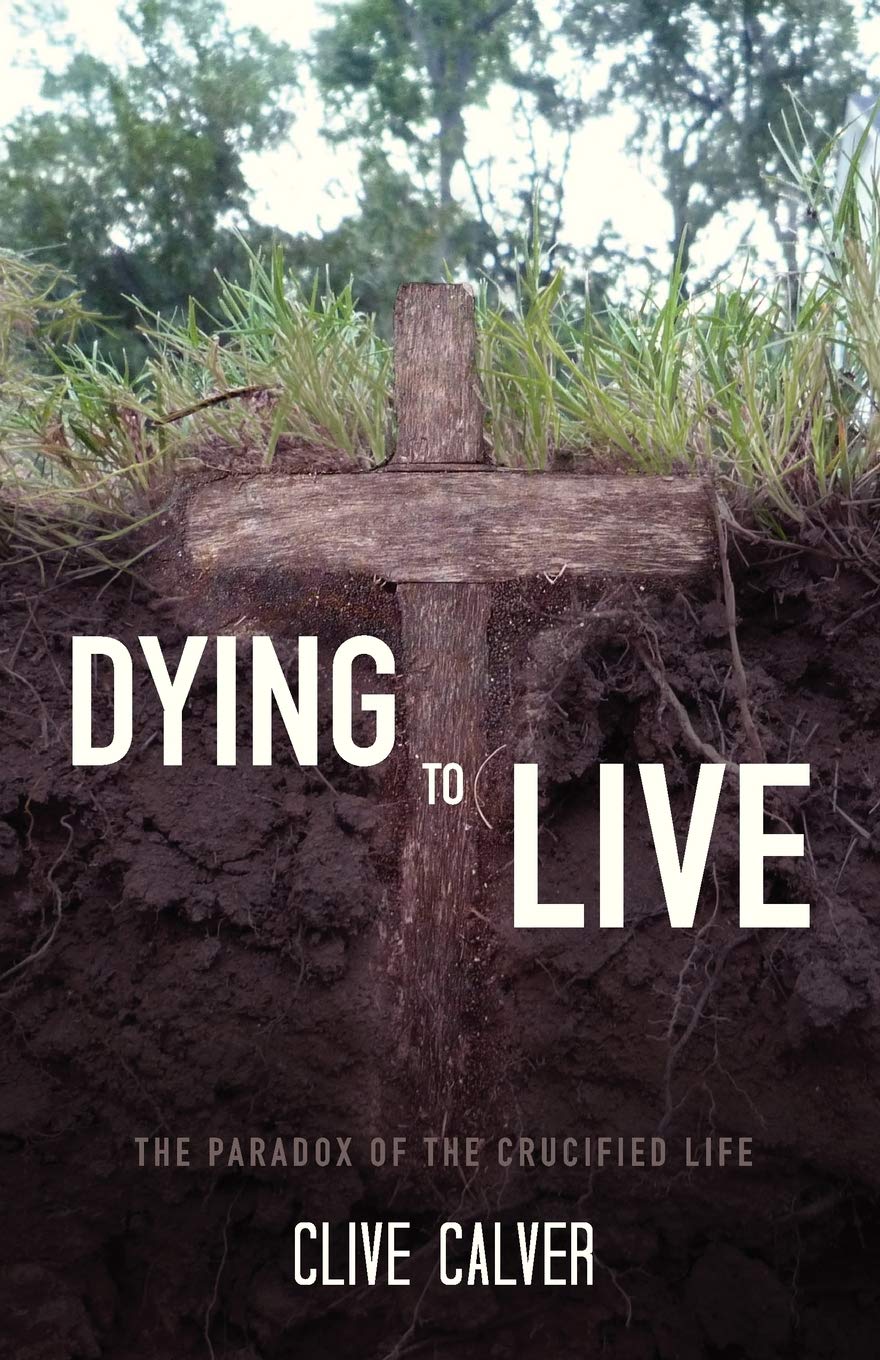
Dying to Live: The Paradox of the Crucified Life

[This is an earlier review I wrote roughly five years ago.]

Clive Calver has written a brief, provocative book on Jesus’ startling remark: “If anyone wishes to come after Me, he must deny himself, and take up his cross daily and follow Me.” (Luke 9:23) Consumer Christianity is an expression to describe the modern Christian phenomenon that one’s Christian experience is just like anything else one might buy: a home, a car, laundry detergent, french-fries, etc.  Whenever your current “place of worship” is no longer satisfying your worship needs, do what any other intelligent consumer would do: switch brands.  This usually amounts to finding a new “place of worship” so that it meets your needs. Forget about conflict resolution; forget about taking part in change; forget other members in your community’s needs; but definitely be sure to forget about obeying God or glorifying Him.  Bottom line: what’s in it for you? Calver never explicitly refers to his target using the expression Consumer Christianity, but he leaves no doubt that this self-centered, pragmatic orientation is a recipe for spiritual destruction.  

Many are not so crass in their spiritual ambitions.  Calver is equally eager to help long-time Christians who find themselves spiritually starving and desperately foraging for spiritual panaceas: increasing volunteer hours, ingesting all the newest Christian literature, etc.  Calver claims that we need to completely reorient our thinking:

I was looking for resurrection in my Christian life.  The only problem was that I hadn’t foreseen that resurrection is necessarily preceded by crucifixion.  There has to be a kind of death before one can be resurrected and enter into new life.

The truth was, all the time I was looking in the wrong direction. I had been searching for something new to add to my spiritual life, but God wanted to subtract my intrusive will and replace it with his will.  

Dying to Live, p. 6

Certainly, volunteering and reading are both good; nevertheless, Calver’s arguing that if we’ve developed this kind of fix-it attitude towards our spiritual lives, we’ve placed the cart before the horse: death comes first.  

One might be tempted to see Calver as advocating some kind of super-spiritual “navel-gazing”: change the way you think and all will be better.  This book is not abstract nonsense.  “Like a valuable gemstone, the Christian life has many facets. Each chapter of this book deals with one facet.” (Calver, 10) The facets (chapter topics) include crucifixionpersonal surrender, discipleshipgiving and others. To concretely illustrate these facets, Calver provides a variety of personal, historical and international anecdotes.  Many of the figures Calver describes are hard-core slaves of righteousness who have grasped Christ’s call to the cross in both word and deed.  In one case, Calver tells the story of a Rwandan woman named Beatrice.  Her husband had been badly beaten during the genocidal conflicts between Hutus and Tutsis of the early 1990’s.  Many years later she unexpectedly found herself sharing the table of fellowship with the man who had savagely beaten her husband.  She never so much as received an apology or even faint recognition of this horror that had so severely scarred her family. Beatrice persevered through both the injury and the added insult of the injurer’s near-absurd failure to even remember the incident. This reminds us Christ’s words, “Father, forgive them; for they do not know what they are doing”––a plea uttered for those who had nailed his limbs to a post! (Luke 23:34) Even from fellow believers, we might not always find basic human decency, let alone the special handling that advertisements tell us we “deserve.”  Christ calls on us to love even our enemies.   Calver provides implicit guidance for living the crucified life through commenting on examples just like Beatrice’s.

Take care that you don’t let reading this book be another quick fix for your spiritual life.  Calver tells the story of Major W. Ian Thomas.  After years of spiritual striving and frustration, Thomas received an inner sense from God along these lines: “You see, for seven years, with utmost sincerity, you have been trying to live for Me, on My behalf, the life that I have been waiting for seven years to live through you.”  (Thomas, quoted in Calver, 84) Get out of Jesus’ way.  Let Him live his crucified life through you.  

Standard
Uncategorized

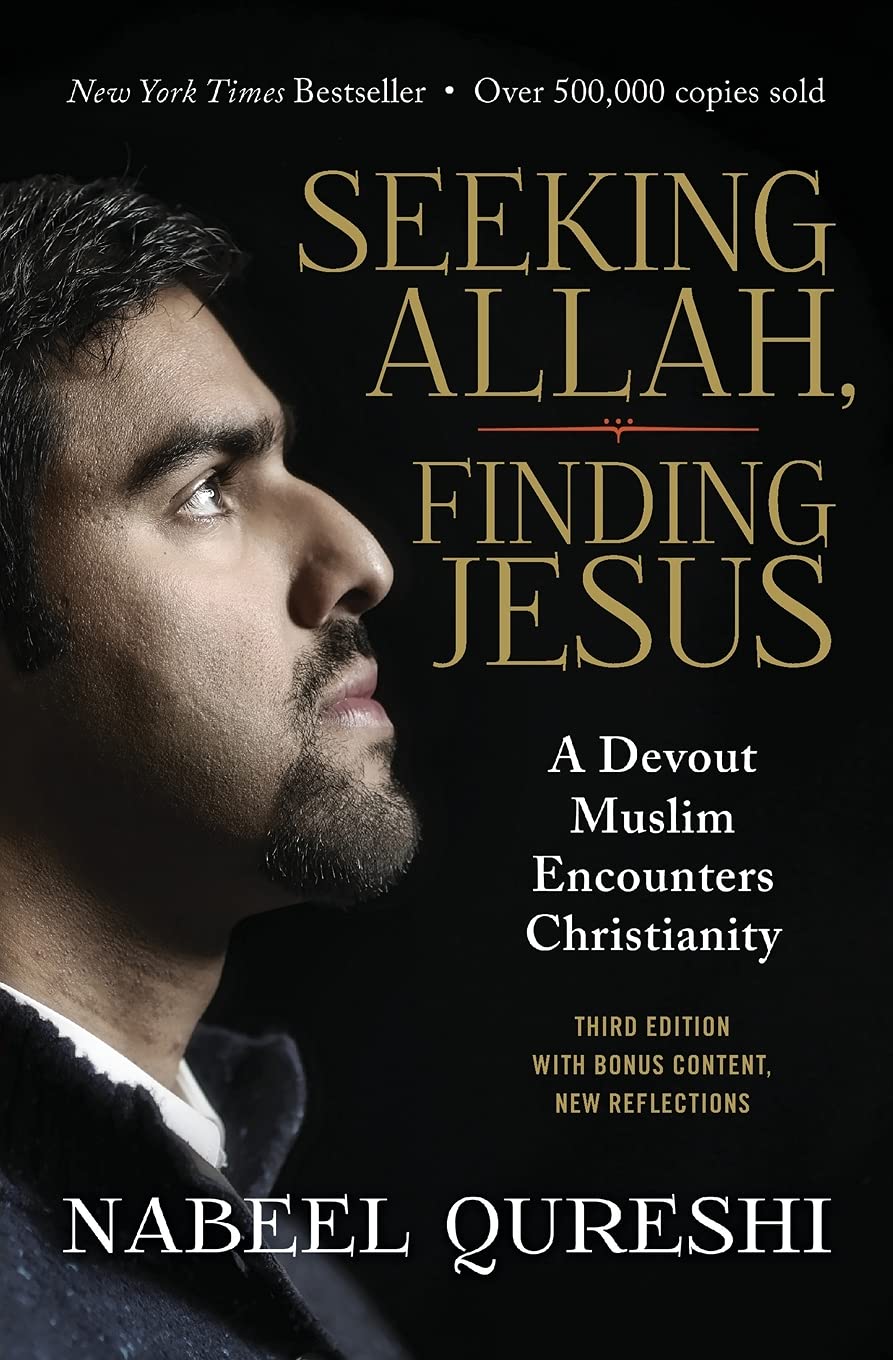
Seeking Allah, Finding Jesus

[This is an earlier review I wrote roughly five years ago.]

Seeking Allah, Finding Jesus (SAFJ) was the most compelling book I’ve read in years.  For my job, I read numerous titles: most of them in tandem, picking them up and putting them down, whittling chapters away over months. Not so here: I could not put down Qureshi’s very personal, gripping tale of coming to faith in Christ.  

Approaching a book like this, a Christian believer might be tempted to reason as follows: Islam is a merciless religion of hate and violence. Qureshi surely had a miserable childhood under the draconian rule of his parents and imams.  He bore this heavy burden joylessly but dutifully, because it was all he knew.  No doubt, upon discovering the good news of freedom in Christ, he tossed off Mohammed’s heavy shackles in exchange for the easy yoke of faith in Christ.  Qureshi’s story is far more fascinating than this one-dimensional portrait.  Qureshi is the Muslim Saul of Tarsus: he had a joyful childhood; he had a loving family; he was part of a warm Muslim community; he loved Islam and the Quran; he was a top student, receiving his MD; he was morally upright by almost any standard; and his family was financially comfortable.  Like Saul, when he surrendered to Christ, he had much to lose and little to gain.   But also like Saul, he couldn’t deny the truth of the risen Jesus Christ.  SAFJ chronicles Qureshi’s journey from his happy Muslim childhood up to just past his conversion.

Philippians 3:4b-7 (NIV) If someone else thinks they have reasons to put confidence in the flesh, I have more: circumcised on the eighth day, of the people of Israel, of the tribe of Benjamin, a Hebrew of Hebrews; in regard to the law, a Pharisee; as for zeal, persecuting the church; as for righteousness based on the law,  faultless. But whatever were gains to me I now consider loss for the sake of Christ.

The book is divided into ten sections and a whopping fifty-three chapters.  Don’t worry, the main body of the book doesn’t break 300 pages; indeed, the shortness of the chapters only increases its readability. The first section begins gives a window into some of ins-and-outs of orthodox Islam while mingling details about Qureshi’s very early life.  This section is valuable in its own right, given the place Islam occupies in current national discussions.  Much of the rest of the book involves Qureshi’s struggle against Christianity during his years in college, as well as his close friendship with a young Christian named David.  Again, if only for the sake of seeing David’s skill in friendship evangelism, the book would be worth the read.  Throughout, one learns about how Muslims view the Bible and Jesus; one learns striking details about Mohammed, the origins of Islam and the Quran; one also learns why so many Muslims are ignorant of such reliable and easy-to-access information about their own religion.  The book also provides a decent apologetic for biblical Christianity, especially the resurrection.

I give this book my highest recommendations.  Viewed as a text on apologetics, SAFJ is lively read filled to the brim with the relationship between biblical Christianity and Islam.   Viewed as an autobiography, one can’t help but get caught up in Qureshi’s inner experience of torment as he faces the prospect of leaving behind the beloved religion of his family.   

Standard
Uncategorized

Reclaiming Love

[This is an earlier review I wrote roughly five years ago. NB: This was before Ravi Zacharias’s ignominious exposure.]

Ajith Fernando’s book Reclaiming Love could just as easily be called Reclaiming 1 Corinthians 13.  “Love is patient, love is kind.  It does not envy, it does not boast.”  Such citations are commonly found on inspirational posters featuring leaping dolphins, ocean spray and hazy sunrises.  It is quoted at weddings and even mocked in movies like the popular comedy, Wedding Crashers.  As this demonstrates, Scripture is not immune to the phenomenon encapsulated by the adage, familiarity breeds contempt.  Fernando breathes life back into this compact passage of Scripture expressing one of the most difficult aspects of Christian living: sacrificial love. It would be hard to find a better man for the job.  For four decades, Fernando has faithfully led grass-roots movements among the urban poor of Sri Lanka.  But, Fernando is more than a salt-of-the-earth Christian servant: he also deftly comments on the original Greek terms found in Paul’s epistle.

The book opens with, “Following the Way of Love.” Along with setting the stage for the rest of the book, he writes the following: 

A few minutes before writing these words, I was mourning the fact that I had helped someone at considerable cost and he had not turned out the way I hoped. The thought came to me that I had wasted my time and energy and suffered unnecessarily…When we love, we are achieving the basic goal in the life of a Christian. Love is not only a means to an end; it is an end in itself.

REclaiming Love, p. 25

I could not have put it better.  Love is the way of Christ, the way of the cross.      

From chapters 3-18, Fernando takes his readers on a nearly word-for-word tour of 1 Corinthians 13:4-7.  On patience alone, Fernando spends three separate chapters.   Fernando points out that the word Paul uses, translated as ‘patience,’ specifically applies to relationships (as opposed to the English word’s broader usage.)  Especially in the West, where people can barely hold marriages together, learning patience is essential for even the most rudimentary Christian service.  The other chapters likewise challenge the me-first mindset of 21st Century America.  Fernando concludes with, “It’s Worth It!” where he draws from the remainder of the chapter (1 Corinthians 13: 8-13).   As the title suggests, this chapter is devoted to persuading the reader that living a life of sacrificial love is far more than dutiful drudgery.   Following Paul’s lead, Fernando makes the case that love is not only the highest virtue, but it will be a central part of our eternal experience.

Just as Fernando reclaims love, he likewise reclaims this dense chapter of Scripture from its needle point fate amid the heaps of fifty-cent thrift store decorations.  Between Fernando’s thoughtful exposition of Scripture and convicting anecdotes, the reader will benefit greatly from this rich little text.  I highly recommend it!

Standard